(Hand)writing
Plus: stardates, donations to Colombia, giant popup book

CONTENTS
the tanjennt: If you don’t take the time to write it, why should I take the time to read it?
self-promo: last week's paid newsletter
links: to explore, coffee fundraising
inspiration & updates

If you don’t take the time to write it, why should I take the time to read it?
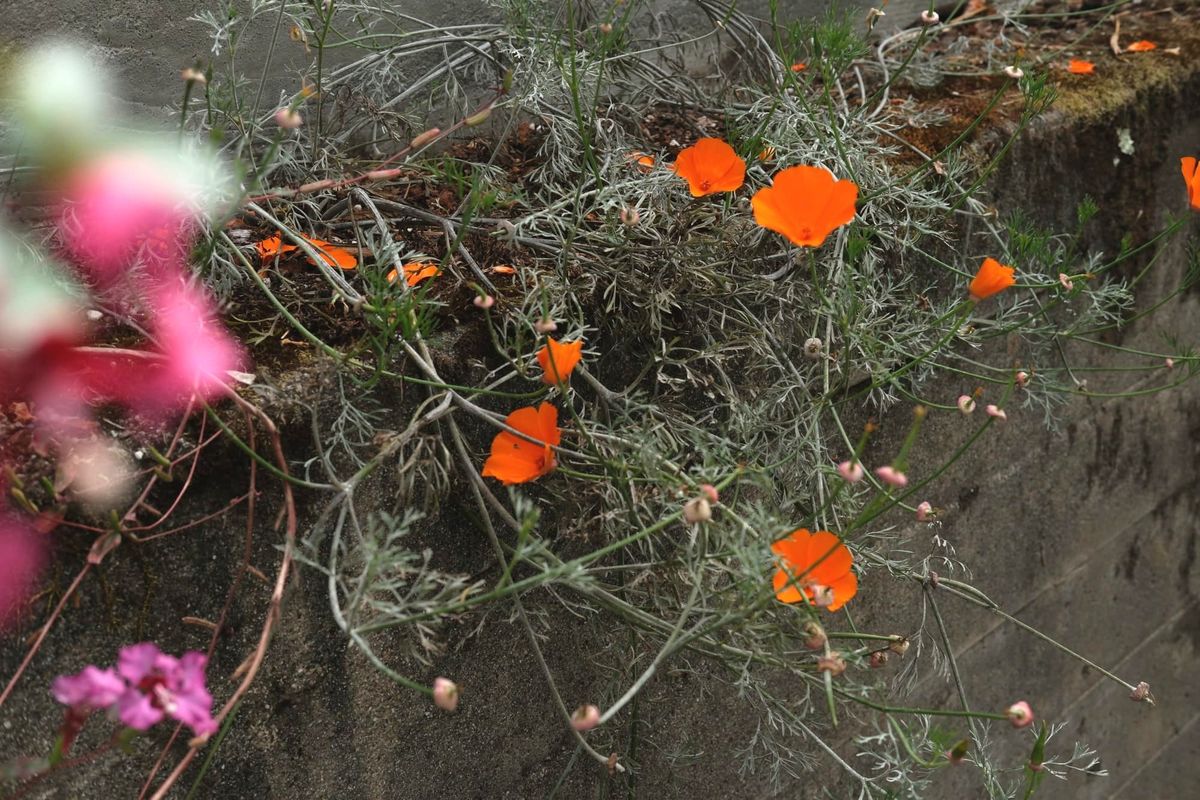
In the late mornings, as I pull back my living room curtains, I’ve seen a honeybee—maybe? I don’t know enough about different types of bees—hovering around and exploring the orange poppies that I seeded months ago. I’ve been trying to plant more pollinator plants, but it’s only been this year that I’ve seen some success.
If I’m lucky, I also spot two mourning doves gorging themselves, fully within a seed feeder my neighbor recently attached to their window. The sparrows and finches flit around them, probably upset that the doves are being rude at the all-you-can-eat buffet. When they give up, they visit my suet feeder that’s low to the ground.
It’s a small but impactful feeling of success: look, I have flowers that bees actually like to visit! I have suet that birds like, even if it’s secondary to another feeder!

I won’t sugarcoat it. For many, including me, writing is difficult. You have to be okay with a trash first draft, knowing that it’s not the final version, and you have to resign yourself to muddling through a second draft, a third one, questioning your life choices, walking away to wash dishes because that seems much more appealing than writing, and maybe land on something that you like. Or not, and you start all over again.
I read somewhere that teachers were calling out AI use by students because they were using complicated words and synonyms. I still remember when my school supply list required both dictionary and thesaurus paperbacks, AND you were dinged if you used the same word too many times.
Sometimes, it feels like I’m the only one in a city-wide radius who refuses to use AI chatbots and gen-AI. As the models learn, excuse me- steal, more and the tells evolve, I find myself reading things with an increasingly critical and suspicious eye. I hate this version of myself because reading used to be a fun, exciting, pleasurable, rewarding activity, and now I’m trudging through a never-ending Slop Swamp just to find one fact-checked thing.
The point of writing isn’t to produce some classical masterpiece. It doesn’t have to be sold or consumed or marketed unless that’s what it’s for. But when it reaches that point? You can’t convince me to buy something, read something, consume something—if you didn’t take the time to create, write, make it.
I very often write on the computer, because I touch-type and my fingers can keep up with my brain. However, there are still times when I keep typing a few words, delete them, type some others, delete, and cycle through too many times…and that’s when I grab my notebook. On paper, I write in pen. I cross things out, I circle phrases I like, I brainstorm garbage, and I draw lines to connect thoughts. Writing is messy. Handwriting is messy, too.
In an article about handwriting in Wired, an expert is quoted:
“Handwriting itself really does matter,” says Robert Wiley, a psychology professor at the University of North Carolina at Greensboro whose research focuses on how the brain processes written language. “Not in an absolute sense; people aren’t going to be illiterate. But will some children have a harder time learning because they’re missing that practice? Yes.”
If you haven’t noticed by some of my topics of choice as of late on Sprudge, I’m enamored with analog. The neon signs that still have to be restored by hand, fountain pens that force you to slow down. Even board games that fine-tune your motor skills, critical thinking, memory, and so much more.
Handwriting is one of those rare activities that fully engages the brain and fine motor skills. One study found that when taking notes, those on a laptop typed verbatim while those using paper reframed the material: “The multi-system brain activation involved in handwriting includes fine motor control, language systems, visual-spatial processing, and attention networks.” This practice also helps with memory retention and learning. A review of papers on handwriting noted that “the neural pathways activated during handwriting overlap significantly with those involved in reading and spelling, supporting literacy development.”
When I’m handwriting, I find myself glancing out the window. I observe more, no longer focused on (distracted by) a digital screen. I watch to see if the bees have a favorite flower, and check in the afternoon if the poppies have folded up yet. I notice when the finches become plumper for nesting season and if there are more finch bullies refusing to share the suet.